
The Reading Simulator - a noninvasive neurolink for kids to get reading naturally and prevent dyslexia reading issues.
Unlocking Early Brain Potential: Exploring a Natural Way to Interact with the Brain that Surpasses Neuralink's Expectations.

When we imagine the future, we often picture the seamless integration of technology and mind, as epitomized in films like "The Matrix", "Johnny Mnemonic", or "Ghost in the Shell", where skills and knowledge can be downloaded directly into the brain. Current neural interface technology, such as Elon Musk's Neuralink, might lead us to believe that this vision is imminent. However, there are physiological and technical hurdles yet to be overcome.
Neuralink’s 1024 electrodes seem like a lot, until you realize the brain has over 86 billion neurons, each making thousands of connections. Moreover, individual brains have unique connectomes – a map of neural connections – making it virtually impossible to create a one-size-fits-all interface. At present, Neurolink's primary application lies in rehabilitation. It's more a medium of repair than a conduit for downloading knowledge.
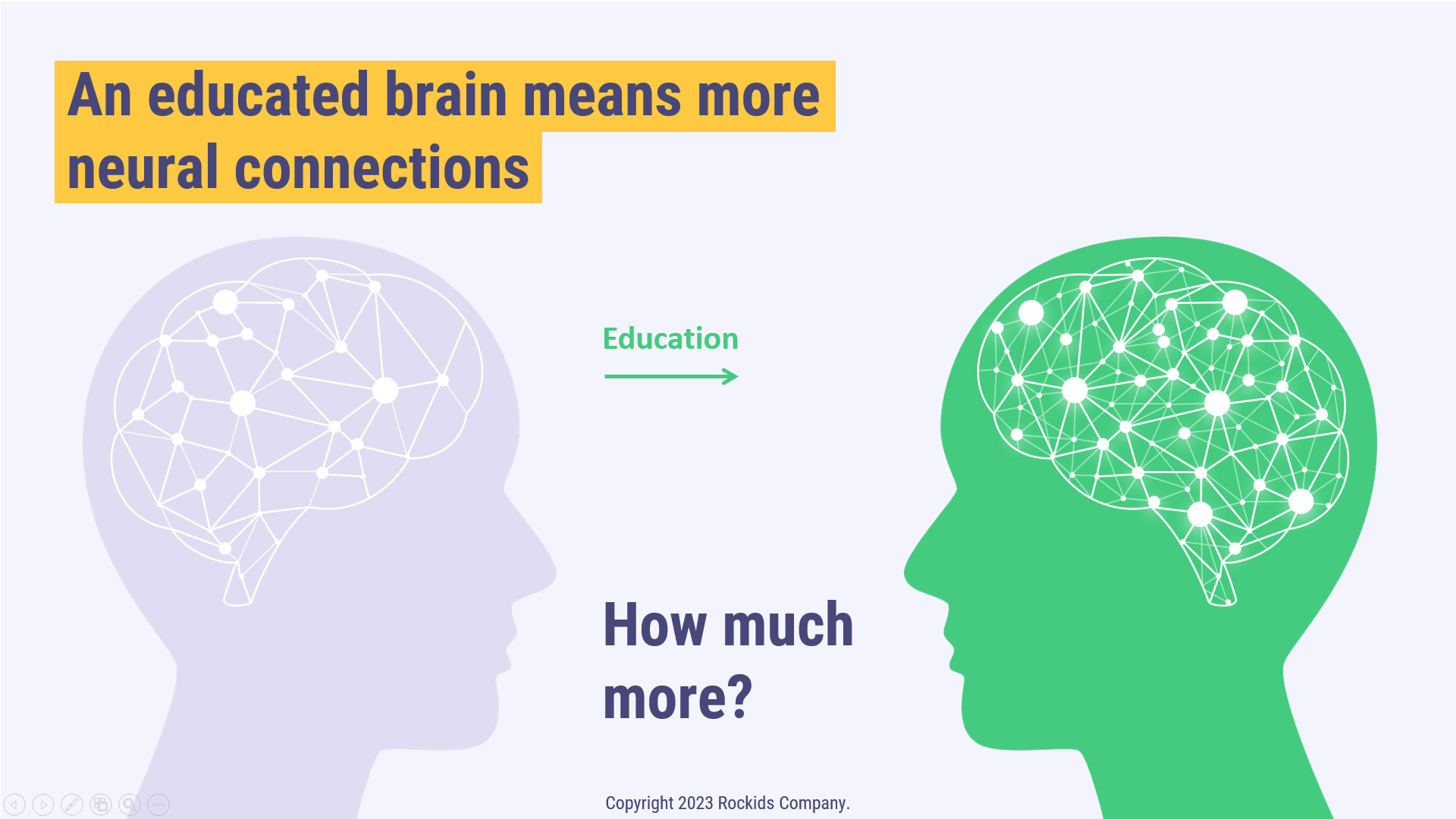
In reality, the brain forms new neural connections in response to learning and experience. From a biological perspective, a trained brain differs from its untrained state through new neural connections.
So, Is there a more ecological way to form neural connections without implanting wires in our heads?
Here's where it gets exciting. Right now, as you read this article, you're forming about 600 new neural connections per second. But as a child, this rate was naturally about a million per second!
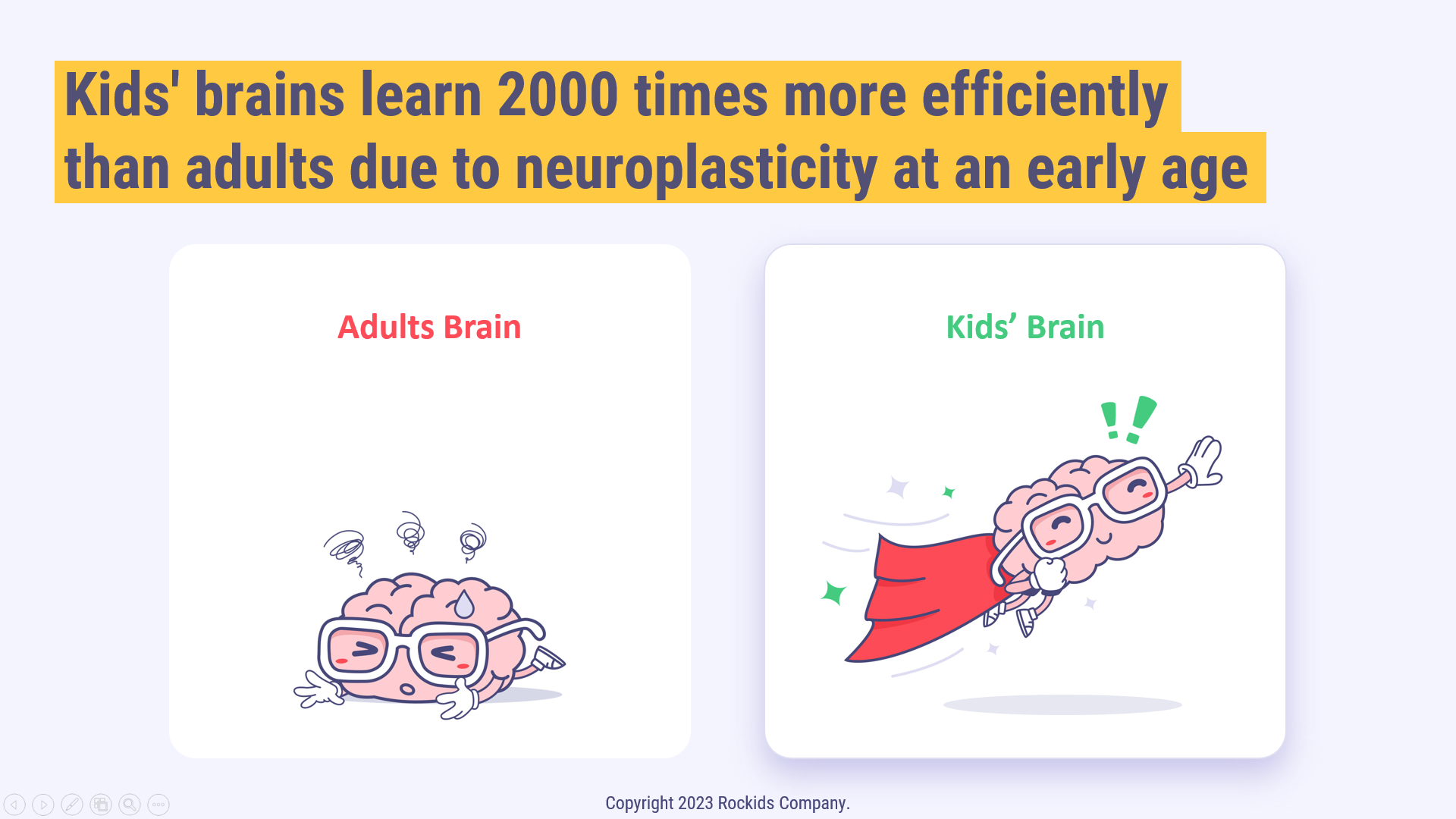
Think about it, a child's brain absorbs knowledge almost 2000 times more efficiently than an adult's. This is known as the neuroplasticity of early brain development, and it works from birth to about 6 years old, peaking at 3 years.
For instance, speech, a uniquely human skill, can only be acquired at this speed and during this time. This learning happens naturally, without any educational process. Just put a toddler in an environment where people speak, and they will learn the language, regardless of its complexity.
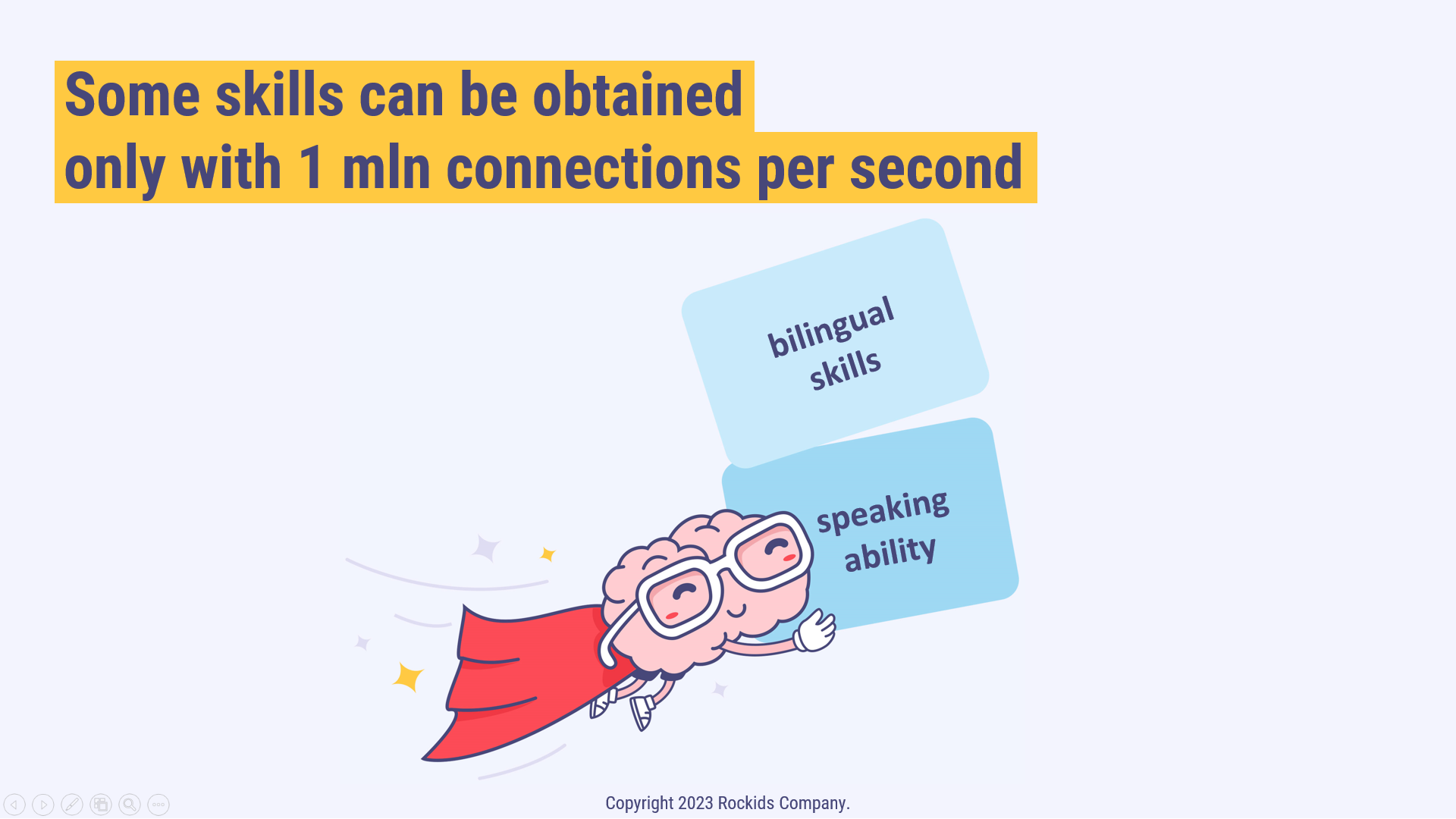
Moreover, if exposed to a bilingual environment, the child will become bilingual, learning from scratch. Conversely, if a child, for reasons like congenital deafness, cannot hear speech and doesn’t receive a cochlear implant before 3 years old, they will likely be unable to speak. Similarly, a child learns to walk upright within 3-5 months, a task that scientists have been teaching Boston Dynamics' robots to do for over 30 years.
It seems as though humans are designed with a specific age for learning. So, we wondered:
Could we make reading as natural and innate for children as speaking, using early-age neuroplasticity?
How can a child naturally pick up reading like they do speaking?
The challenge is that while a child in a speaking environment will learn to talk, placing them in a library won't teach them to read. Books can't speak or explain how to read them.
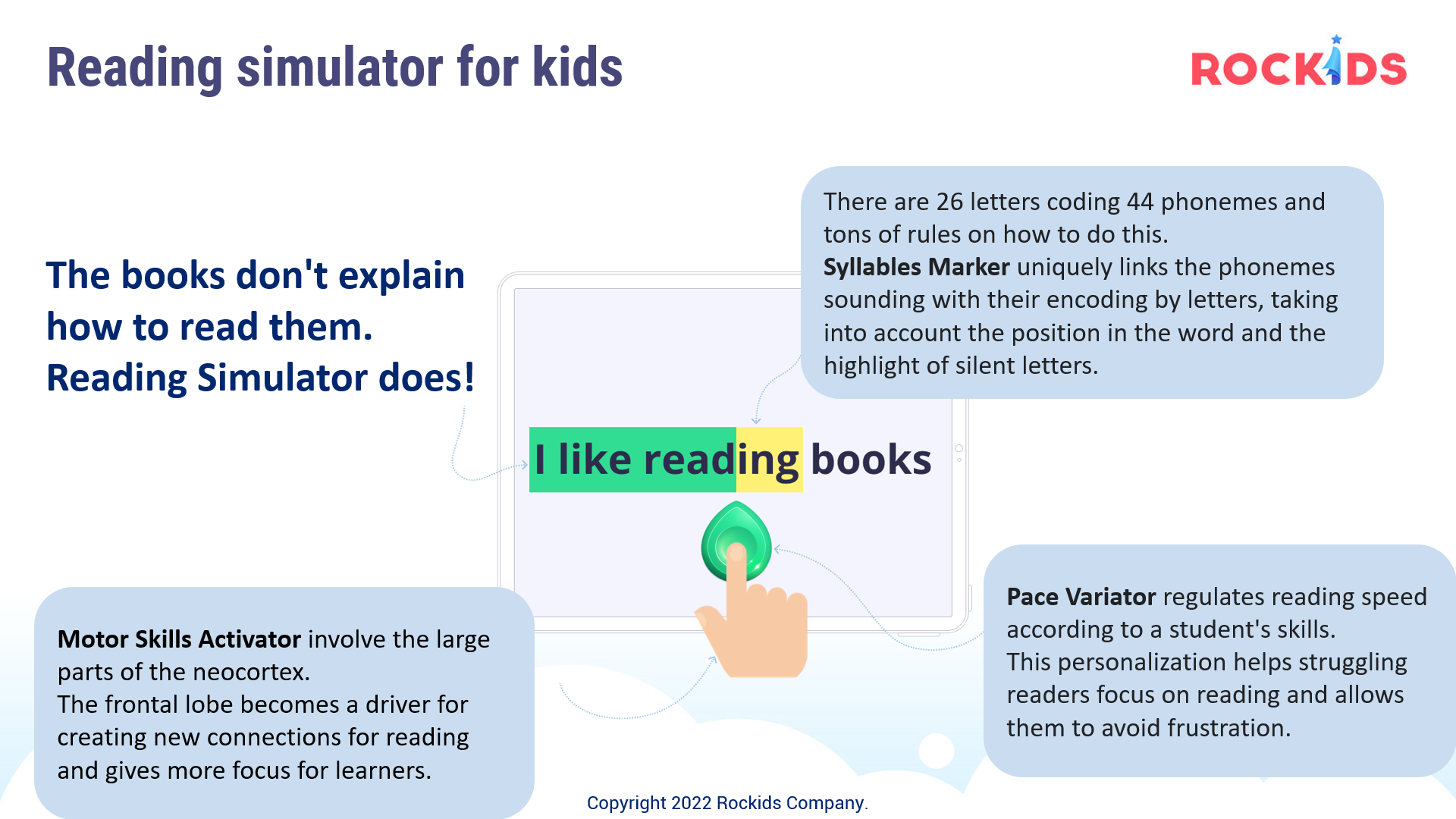
We've designed an interface that does this! The Rockids Reading Simulator turns any book into a teaching reading book. It literally shows how letters encode sounds in a way understandable to a child's brain. With this tool, children can acquire reading skills before school.
For children at risk of dyslexia, this isn't just beneficial; it's necessary. Reading requires the synchronized work of many brain areas, which dyslexia hinders. The "dyslexia paradox" is that it's often diagnosed around ages 9-10, when neuroplasticity has decreased, making interventions less effective.
Research shows that 75-80% of children at risk of dyslexia can become proficient readers if they start learning at ages 3-4. Ideally, intervention should happen in early childhood, but dyslexia is often undiagnosed then.
All it takes is incorporating this simulator into your child's daily reading routine. Your child will gain reading skills and prevent reading problems affected by dyslexia. Reading will become a natural skill, just like speaking. This is not cyberpunk science fiction; it's a tangible reality brought about by harnessing the natural capabilities of the human brain.
The Reading Simulator is suitable for children as young as 2 years old, capitalizing on early brain development neuroplasticity.
It integrates the phonetic approach, the only scientifically proven method effective for teaching reading, especially for dyslexic children.
It uses fine motor skills to activate the frontal lobes, enhancing learning effectiveness.
The simulator's interface is based on human-computer interaction with haptic feedback and eye-tracking, allowing for an individualized learning curve and optimal reading skill acquisition for each child.
Try the demo now, preferably on touch-screen devices (tablets, smartphones): https://www.rockids.school/stories/chappy
Here's a video on how it works:
P.S.
We believe in the advantages of early-age neuroplasticity over traditional methods. The future of education lies in products and services utilizing this amazing feature. We're building a community of neuroeducation enthusiasts and welcome your ideas and feedback:
If you know who would benefit from this, please share:
If you're interested in this topic, follow my Substack.
Also, vote for the topic of the next article:
See you soon!